#1
Correct Identification and Monitoring
Best for: Homeowners who just noticed large wasps and want to know what they're dealing with
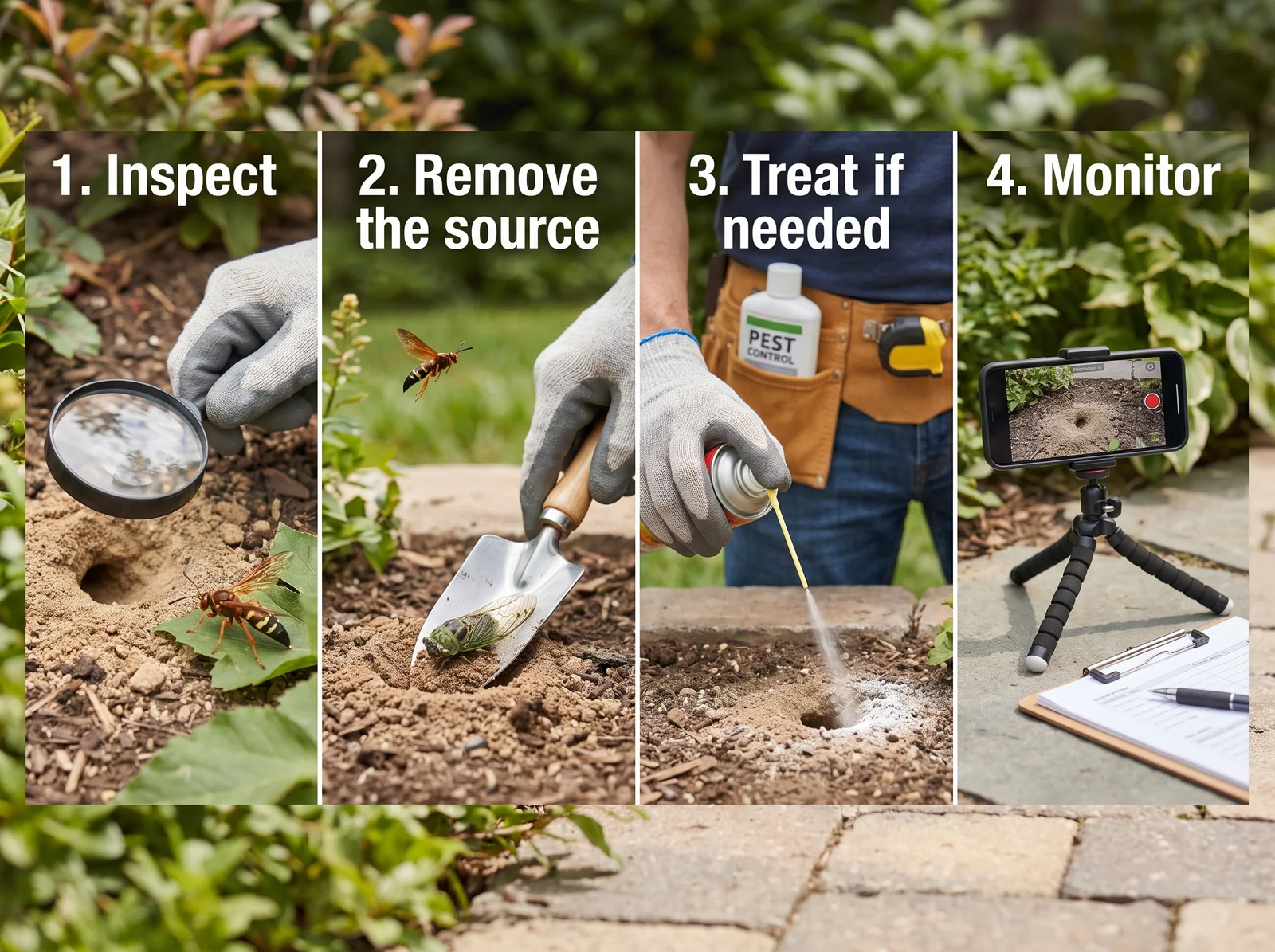
Before doing anything else, confirm you actually have cicada killer wasps. They're solitary, about 1.5 to 2 inches long, with a black and yellow pattern that gets mistaken for European hornets or giant hornets. Watching their behavior for a few days helps you understand the size of the problem.
Cicada killers dig individual burrows rather than living in a shared nest, so what looks like an infestation is usually several wasps digging near each other in good soil. Tracking where burrows appear over a week or two tells you whether this is a minor patch or a larger pattern across your lawn.
Useful strengths
- Costs nothing and carries no risk
- Prevents unnecessary pesticide use on the wrong pest
- Helps you decide if the problem is small or spread out
- Gives you a baseline to judge if other steps are working
Limits to consider
- Doesn't reduce burrows on its own
- Requires a little patience and observation time
#2
Improve Lawn Density and Soil Moisture
Best for: Yards with thin grass, bare patches, or sandy soil where burrows keep showing up
Cicada killers prefer loose, dry, exposed soil for digging. Thickening your lawn through overseeding and regular watering removes the open ground they're looking for. This is the most effective long-term fix because it addresses why they chose your yard in the first place.
Soil moisture matters too. Wasps struggle to dig burrows in soil that's consistently damp, so a normal watering schedule for healthy turf does double duty as wasp discouragement. This works well in sunny, well-drained areas like slopes, garden borders, and sandy strips along sidewalks.
Useful strengths
- Addresses the root cause instead of just the symptoms
- Improves overall lawn health as a side benefit
- No chemicals or special equipment needed
- Works well combined with other steps on this list
Limits to consider
- Takes weeks to months to show full results
- Doesn't help with wasps already established this season
- Less practical in shaded or naturally sandy yards
#3
Routine Lawn Sanitation
Best for: Yards with debris, thatch buildup, or exposed dirt patches attracting digging insects
Regular mowing, dethatching, and clearing leaf litter or mulch piles reduce the loose, undisturbed ground cicada killers favor. Sanitation isn't a fast fix, but it removes small pockets of bare soil that often go unnoticed until wasps move in.
Cleaning up woodpiles, garden edges, and areas where soil has been left exposed after landscaping work closes off spots that are easy for wasps to find. This step works best done early in spring before females start scouting for burrow sites.
Useful strengths
- Reduces multiple small burrow sites at once
- Improves the look and health of your yard
- Pairs naturally with mowing and yard cleanup you already do
Limits to consider
- Won't stop wasps already digging
- Needs to be repeated seasonally to stay effective
#4
Physical Barriers Over Burrow Areas
Best for: Small, defined burrow clusters in walkways, gardens, or play areas
Covering active burrow entrances with landscape fabric, mulch, or a temporary tarp blocks wasps from returning to dig or re-dig in that spot. This is useful for isolated clusters near patios or paths where you want an immediate barrier without chemicals.
For garden beds, a layer of mulch over bare soil discourages new burrows while letting plants grow normally. This method works best paired with the lawn density fixes above, since barriers alone don't stop wasps from digging a few feet away.
Useful strengths
- Quick to set up
- No pesticide exposure for people or pets
- Good for high-traffic areas where you want fast results
Limits to consider
- Only protects the covered area, not the whole yard
- Wasps may relocate to nearby bare soil instead
- Not practical for large, spread-out lawns
#5
Manual Burrow Removal
Best for: A handful of isolated burrows discovered early in the season
Filling in individual burrows with soil after wasps have left for the day can stop that specific hole from being reused. This is a low-effort option when you're dealing with just one or two burrows rather than a widespread pattern.
Because cicada killers rarely sting unless handled or stepped on, working in the yard during their normal activity is usually fine if you avoid grabbing them or standing directly over an active hole. Doing this in early morning or evening, when wasps are less active, keeps things calmer.
Useful strengths
- Immediate and targeted
- No pesticide involved
- Simple enough for most homeowners to do themselves
Limits to consider
- Not practical if there are many burrows
- Wasps may dig a new burrow nearby
- Requires repeating if new holes appear
#6
Targeted Pesticide Application
Best for: Persistent, widespread burrowing that hasn't responded to lawn changes
When burrows keep appearing across a large area despite lawn improvements, a pesticide labeled for ground-nesting wasps and for use on lawns may be the next step. Only use a product that is EPA-registered for cicada killer wasps or ground-nesting wasps at the site you're treating, and follow the label exactly as written.
The label will specify where and how the product can be applied, how long to keep people and pets off the treated area, and any other safety steps. Skipping label directions or mixing anything on your own isn't safe and isn't necessary since labeled products are designed to work as directed.
Useful strengths
- Can address burrows across a wider area
- Labeled products are tested for the stated use when followed correctly
Limits to consider
- Requires strict label compliance for safety
- Doesn't fix the soil conditions that attracted wasps
- Not a first choice given how rarely these wasps cause real harm
#7
Professional Pest Control Service
Best for: Large infestations, repeated stings, or burrows near high-traffic areas like doorways or play spaces
A licensed pest control professional can assess how widespread the burrowing is and apply treatment safely if warranted. This is the right call when burrows are dense, when someone in the home has a known allergy to stings, or when previous DIY steps haven't slowed things down.
Professionals also have experience telling cicada killers apart from more aggressive wasps, which matters if you're unsure what you're dealing with. They can combine lawn recommendations with any treatment needed, so you're not guessing at long-term fixes.
Useful strengths
- Correct identification and safe handling
- Access to professional-grade equipment and judgment
- Useful for allergy concerns or high-risk locations
Limits to consider
- Costs more than DIY options
- May be more than needed for a small, isolated problem
Why do cicada killer wasps show up in your yard?
Cicada killer wasps look for loose, well-drained soil with little grass cover, like sandy patches, garden edges, or thin lawn areas. They dig individual burrows to lay eggs and store paralyzed cicadas as food for their larvae.
A yard with several burrows usually means multiple females found the same favorable soil conditions, not that they're working together. Fixing the soil and lawn density is more effective long-term than treating each burrow one at a time.
Are cicada killer wasps actually dangerous?
Male cicada killers can't sting at all, and females rarely sting people unless they're picked up or stepped on. Their large size and loud buzzing make them look more threatening than they are.
The bigger issue for most homeowners is the burrowing itself, which can leave small mounds of dirt in the lawn. Unless someone in the home has a known sting allergy, most cases don't require anything beyond the lower-risk steps on this list.
Questions you may still have
Will cicada killer wasps go away on their own?
Adult cicada killers are typically active for six to eight weeks in mid to late summer, then die off as the season ends. If you're seeing them for the first time and the lawn is otherwise healthy, waiting them out while making small lawn improvements often solves the problem without further action.
Do cicada killer wasps hurt my lawn?
The wasps themselves don't eat grass, but their digging can leave small mounds or holes in bare or thin turf. Improving lawn density and soil moisture reduces both the burrowing and the appearance of dirt mounds over time.
What attracts cicada killer wasps to a specific spot?
They're drawn to loose, dry, sandy, or bare soil with good sun exposure, which makes digging easier. Areas like garden borders, thin lawn patches, and sidewalk edges are common hot spots, especially where cicadas are also active nearby.
When should I call a professional instead of handling it myself?
Call a licensed pest professional if burrows are widespread, if someone in your home has a sting allergy, or if wasps are nesting near doors, patios, or play areas where contact is likely. A professional can also confirm identification if you're not certain it's a cicada killer and not a more aggressive species.