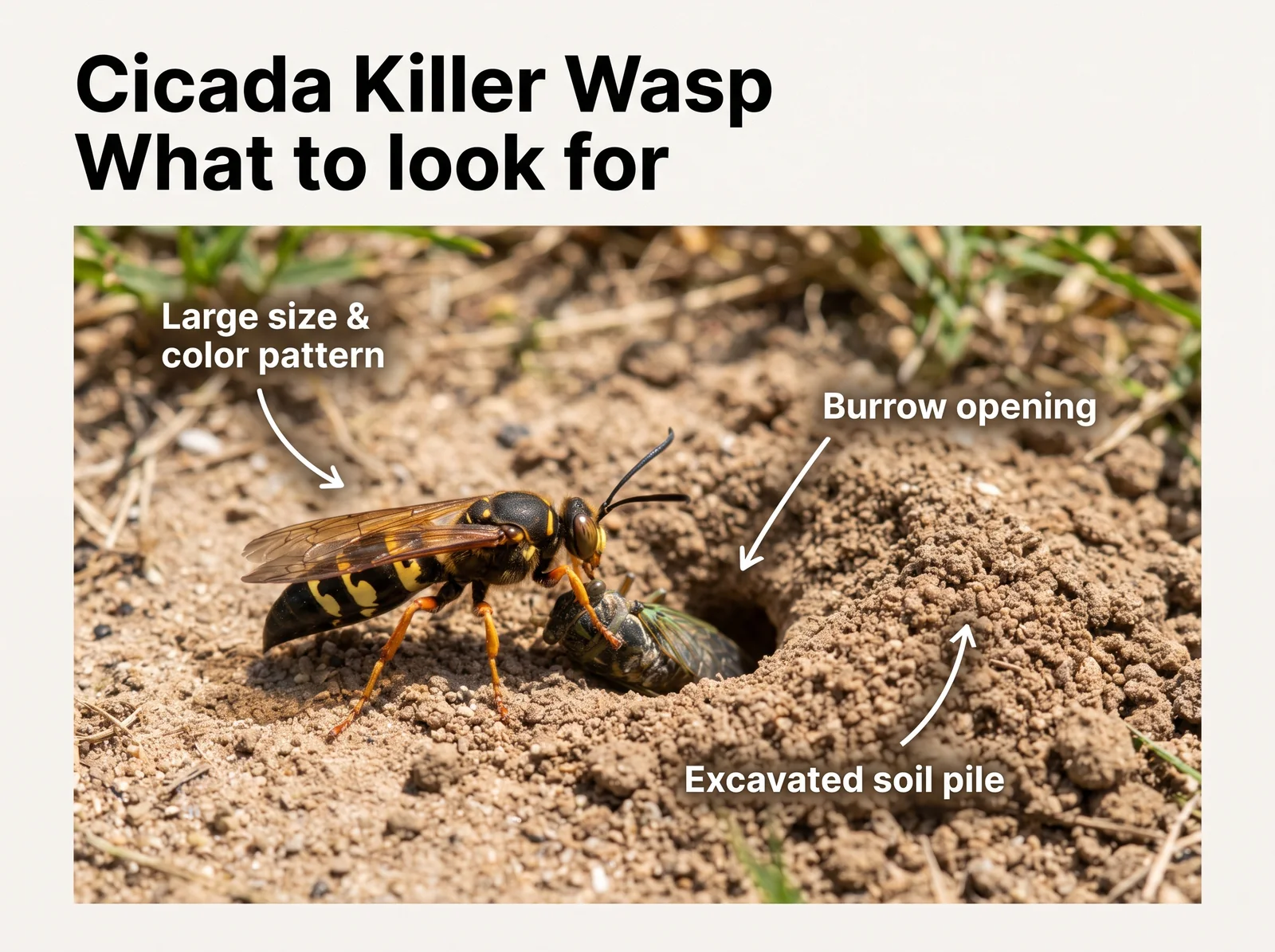
Why do people try using ammonia against cicada killer wasps?
Many homeowners reach for household ammonia because it carries a sharp, suffocating odor that seems strong enough to drive away any insect. The theory is that pouring liquid down an open burrow will either kill the wasp or make the tunnel uninhabitable.
In reality, ammonia quickly dissipates or binds to organic matter in your soil. Cicada killer burrows run deep and often branch into several individual chambers, meaning a quick pour rarely reaches the resting insect or its eggs.
What are the risks of pouring ammonia into your lawn?
Pouring household cleaning ammonia directly onto your lawn presents several clear problems. High concentrations of ammonia salts can rapidly scorch grass blades and kill off desirable root systems, leaving bare dead patches in your turf.
Undiluted ammonia also creates strong fumes that can irritate your eyes, skin, and lungs when poured outdoors on warm days. Runoff can harm beneficial soil microbes, earthworms, and nearby landscaping plants that keep your garden healthy.
Do cicada killer wasps pose a serious danger to your family?
Despite their large size and intimidating flight patterns, cicada killer wasps are solitary ground-nesters with very little interest in people. The males buzz aggressively to defend territory, but they lack a stinger entirely and cannot harm you.
Females possess a stinger reserved for paralyzing cicadas to feed their young underground. A female will only sting if you step directly on her with bare feet or press her against your skin, making widespread chemical intervention unnecessary.
How does improving soil moisture stop them from nesting?
Cicada killers search specifically for dry, light, well-drained soil where digging tunnels is fast and tunnels will not collapse. If your lawn is parched and sandy, it acts like an open invitation for females looking to build nests.
Applying consistent water to dry patches makes the ground heavy, damp, and unappealing for nesting females. Setting up a regular irrigation schedule during midsummer digging activity often encourages these wasps to find another location entirely.
What yard maintenance steps reduce their preferred habitat?
Dense, healthy turfgrass is your best natural defense against ground-nesting solitary wasps. Cicada killers avoid dense root networks because they cannot easily push loose dirt out of the hole to create their signature U-shaped mounds.
Focus on regular lawn care practices such as aeration, overseeding thin spots in early autumn, and keeping your mowing height high during summer months. Mulching open garden beds with thick bark chips also blocks access to bare ground.
- Mow your grass at a taller setting to shade the soil surface.
- Overseed bare or thin dirt areas before the summer nesting period.
- Apply two to three inches of hardwood mulch over bare garden beds.
- Keep garden borders clear of loose, powdery topsoil.
How should you handle existing burrows safely?
If you already have active burrows in high-traffic areas, simple physical management works well. You can rake smooth the excavated dirt piles late in the evening when wasps are inactive, followed by a thorough watering of the area.
Covering active entrance holes with a small piece of landscape fabric or patio stone prevents the female from re-entering her nest. Without access to bring in paralyzed cicadas, the wasp quickly abandons the site to dig elsewhere.
When should you consider registered pest control options?
If cultural controls fail and a heavy infestation creates extensive tunneling near doorways or play areas, avoid homemade chemical mixtures entirely. Instead, look for an EPA-registered product specifically labeled for ground-nesting wasps in residential lawns.
Always follow every instruction on the product label, including required protective gear and entry restrictions for pets and family members. If you feel uncomfortable treating the area yourself, hiring a licensed pest management company is the safest choice.
Questions you may still have
Can ammonia fumes harm nearby pets or garden plants?
Yes. Pouring ammonia into open ground releases concentrated vapors that irritate pet paws, noses, and eyes. High concentrations in the soil also alter local pH levels and pull moisture away from tender plant roots, which can cause yellowing, foliage burn, or complete plant death in surrounding turf and garden borders.
How long do cicada killer wasps remain active in yards?
Adult cicada killer wasps are active for only about six to eight weeks during mid-to-late summer, perfectly timed with annual cicada emergence. Once adults mate and provision their underground burrows, they naturally die off, and the larvae remain buried until the following summer.
Will vinegar work better than ammonia for ground burrows?
No. Like ammonia, household vinegar is an unproven home remedy that fails to eliminate deep underground nests. Strong vinegar solutions act as non-selective contact herbicides that kill your grass and beneficial soil life without reliably reaching the wasp chambers deep inside the tunnel system.