What are eastern cicada killer wasps?
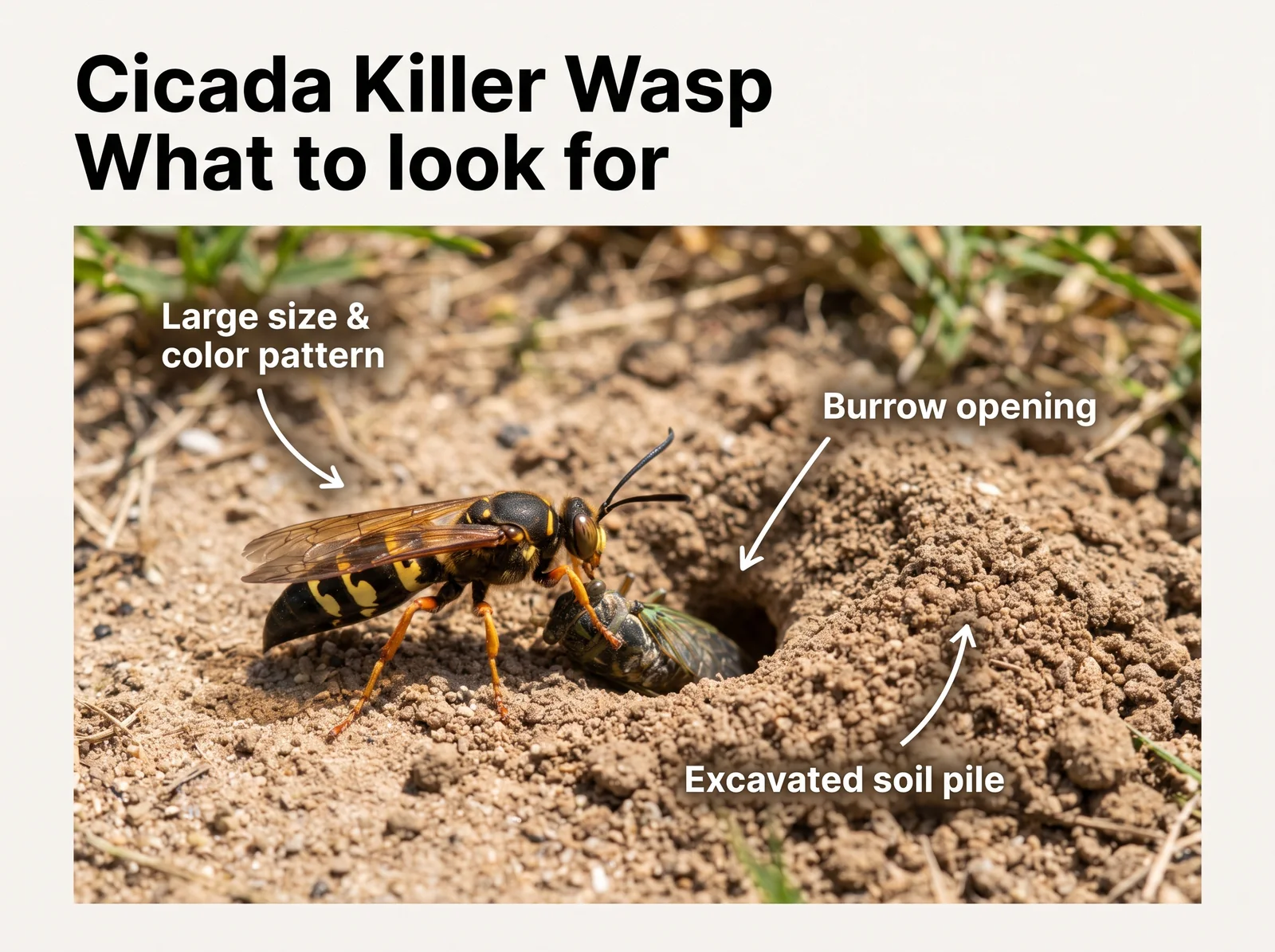
Eastern cicada killers are among the largest wasps you will encounter in North America, often reaching up to two inches in length. They feature black bodies with distinct yellow bands across their abdomen and reddish-translucent wings. Despite their formidable appearance, their life cycle revolves entirely around hunting annual cicadas during mid to late summer.
Unlike yellowjackets or hornets, cicada killers are solitary ground nesters. Females dig individual tunnels in dry, sandy soil where they store paralyzed cicadas as food for their larvae. Males often patrol territories aggressively by darting at movement, but they lack stingers entirely. Females possess stingers solely for hunting and will only sting if stepped on or handled roughly.
How do you identify their burrows in your yard?
You can easily spot eastern cicada killer burrows by looking for horseshoe-shaped piles of loose soil surrounding a nickel-sized entrance hole. These mounds typically appear in early to mid-summer along sidewalk edges, flower beds, sandy slopes, and thin patches of lawn.
Each burrow consists of an angled main tunnel with several side chambers branching off below the surface. A single female digs her own network, but multiple females often choose the same patch of open ground. This creates loose colonies that make it look like an entire swarm has taken over your property.
Why are cicada killers attracted to your property?
Cicada killers search for specific environmental conditions before they start digging. They prefer loose, well-drained, sandy soil exposed to full sunlight, which keeps their underground nursery warm and dry. Thin turf, bare garden beds, and dry patches beneath trees provide effortless digging spots.
An abundance of mature deciduous trees also draws them in, as these trees host the cicadas they hunt. If your yard offers both sunny, exposed dirt and nearby trees full of cicadas, female wasps view your lawn as prime real estate to establish their burrows.
How can lawn care naturally deter these wasps?
Improving your overall lawn density is the best long-term deterrent against eastern cicada killers. Thick, healthy grass blocks sunlight from warming the soil surface and creates a dense root network that female wasps find difficult to penetrate.
Watering your lawn deeply and consistently during July and August makes the soil unappealing for nesting. Cicada killers avoid wet, heavy ground because moisture threatens the survival of their larvae. Overseeding sparse patches in spring or early fall will fill in the bare spots they favor.
- Mow your grass at a higher setting during summer to shade the soil.
- Aerate and overseed thin turf areas to build a dense root barrier.
- Apply a thick layer of organic mulch or landscape fabric over exposed garden beds.
What physical methods help discourage active nesting?
If you already have active burrows, simple physical disruption can encourage the wasps to abandon the site. Raking flat the mounds of excavated dirt disorients returning females and makes it harder for them to relocate their specific tunnel entrances.
Placing physical barriers directly over the burrow entrances provides immediate relief. Stepping stones, landscape netting, or heavy tarps laid across favored nesting zones force the wasps to seek alternative nesting grounds away from high-traffic outdoor living spaces.
- Rake dirt mounds smooth as soon as they appear in the morning.
- Place wire mesh or heavy gravel over frequently targeted nesting zones.
- Run lawn sprinklers over dry nesting sites during peak midday wasp activity.
When should you consider pesticide applications?
Chemical controls are generally unnecessary because adult cicada killers die off naturally by late summer, leaving the yard safe for fall activities. However, if burrows are situated next to entryways, play areas, or walkways where accidental contact is likely, targeted treatments can help.
If you choose to use pesticides, select only an EPA-registered product specifically labeled for ground-nesting wasps and outdoor lawn use. Apply the product directly to individual burrow openings at dusk or dawn when the female wasp is inside resting, and follow all safety instructions printed on the label.
How do you prevent cicada killers from returning next year?
Because cicada killer larvae overwinter underground and emerge the following summer, early prevention is key. Addressing soil quality in early spring before the next generation emerges interrupts their multi-year reproductive cycle.
Focus on establishing vigorous ground cover over areas that saw heavy activity the previous year. Maintaining consistent irrigation schedules and repairing bare soil spots before July effectively signals to newly emerged adults that your lawn is no longer suitable for burrowing.
Questions you may still have
Can eastern cicada killer wasps cause structural damage to your home?
No, eastern cicada killers do not chew wood, enter walls, or damage building foundations. Their digging is confined entirely to soil, sand, and fine gravel outdoors. While their small excavation mounds can make a lawn look untidy and disrupt delicate plant roots, they pose zero structural threat to your house, patio slabs, or outbuildings.
Do male cicada killer wasps pose any real danger to pets or children?
Male cicada killers are completely harmless because they do not have stingers. They frequently dive toward people, pets, and lawnmowers to defend their territory, which can feel intimidating. However, this display is entirely a bluff. Only females can sting, and they reserve their venom for cicadas unless severely provoked or stepped on with bare feet.
How long does the adult cicada killer wasp season last?
The active adult season is relatively brief, usually lasting between four to six weeks during mid to late summer. Adults emerge in July, mate, dig burrows, provision their nests with cicadas, and naturally die off by late August or early September. Once adult activity ceases, the underground larvae remain dormant until the following summer.