Why are cicada killers digging in your yard?
Cicada killers target specific outdoor environments that make digging effortless. Female wasps search for dry, loose, sandy soil in full sunlight. Bare spots along sidewalk edges, patchy turf on slopes, and unmulched planting beds provide the perfect setting for their underground nursery chambers.
The timing of their arrival corresponds directly with the emergence of annual cicadas in mid to late summer. Adult females hunt cicadas in nearby trees, paralyze them with a sting, and drag them back into their burrows to feed their developing larvae. If your yard provides both food sources and easy-to-dig soil, multiple females will often settle in the same general area.
- Unshaded areas with loose, sandy, or light soil
- Sparse turfgrass with patchy ground cover
- Nearby deciduous trees hosting active cicada populations
How do you identify their burrows correctly?
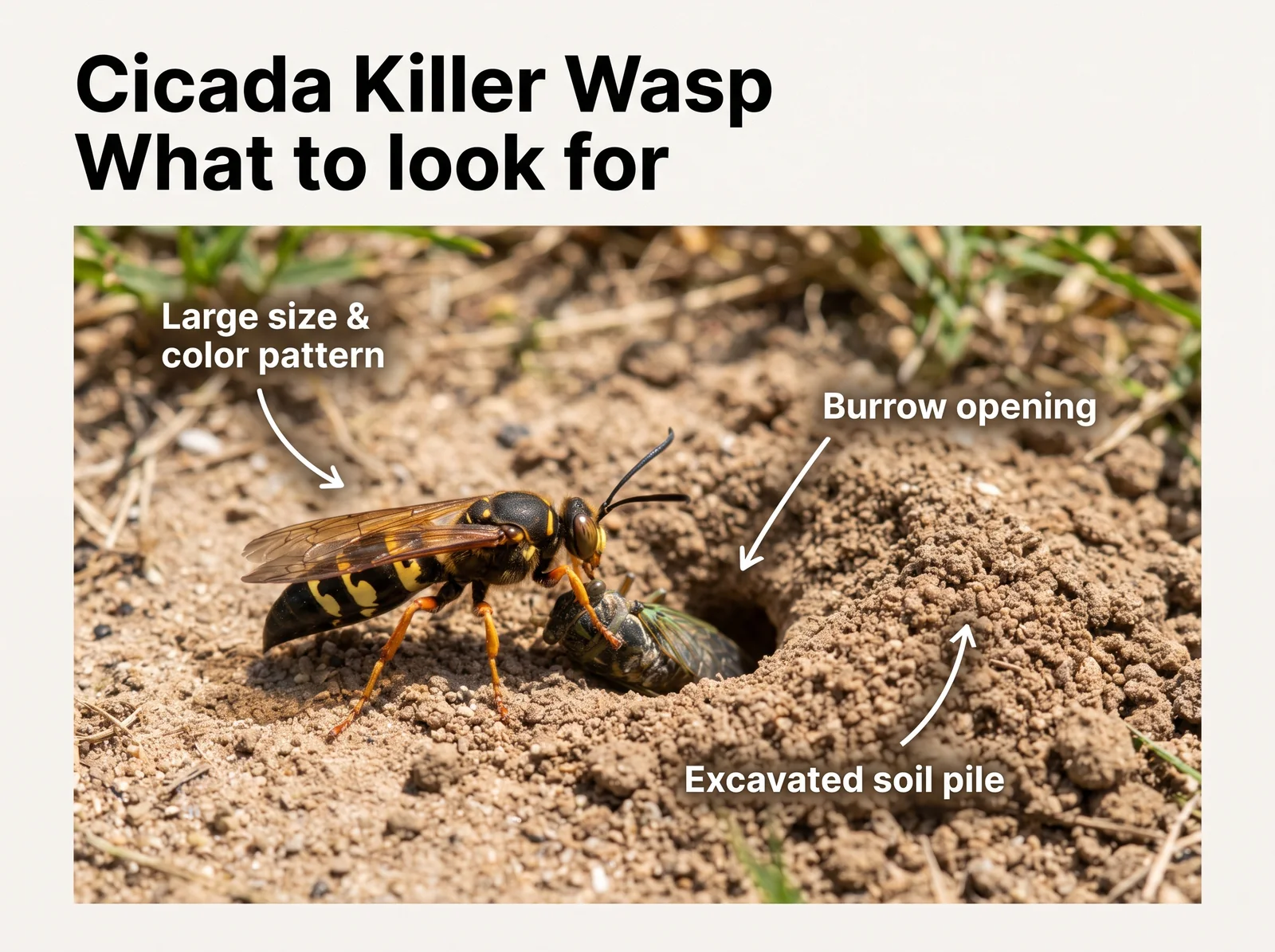
Before you take action, confirm that the ground disturbance belongs to a cicada killer rather than another ground-nesting insect or mammal. A cicada killer burrow features a distinct hole roughly the diameter of a quarter, typically surrounded by a horseshoe-shaped pile of excavated dirt.
Unlike social wasps that share a single colony, cicada killers are solitary. Each female excavates her own tunnel system, though several dozen wasps may build burrows close together if ground conditions are ideal. Look for large, black-and-yellow wasps hovering low over the lawn during warm, sunny afternoons to confirm their presence.
How does adjusting your watering schedule deter them?
Moisture management is one of the most reliable cultural controls for discouraging ground-nesting wasps. Cicada killers avoid saturated soil because damp earth is heavy to dig, collapses easily, and encourages mold growth that can ruin their egg chambers.
When you notice early digging activity in midsummer, set up a sprinkler over the affected zone. Soak the area deeply once or twice a week rather than giving it light, shallow sprinkles. Keeping the top few inches of soil consistently moist during July and August forces the wasps to abandon their digging efforts and search for drier ground.
Can lawn maintenance prevent future nesting?
A dense, healthy lawn serves as a natural barrier against cicada killer nesting. Female wasps prefer bare ground because thick grass roots make burrow excavation nearly impossible. Improving your turf density will significantly lower the chances of wasps returning next summer.
Mow your lawn at the highest recommended setting for your grass species during the summer months. Taller grass shades the soil surface, cooling the ground and hiding bare dirt from searching females. Plan to aerate, overseed, and fertilize weak patches in early autumn or spring so new grass fills in before the next wasp season begins.
- Raise mower blade height to keep grass thick and tall
- Overseed bare patches in late summer or early spring
- Apply mulch at least two inches deep in landscape beds
Should you worry about stings and aggressive behavior?
The sight of two-inch wasps darting across your lawn can be unsettling, but their behavior is largely defensive posturing. The wasps you see aggressively buzzing around your legs or dive-bombing nearby pets are almost always males defending their territory. Male cicada killers lack a stinger entirely and pose no physical danger.
Female cicada killers possess stingers, but they reserve their venom for paralyzing cicadas. They do not guard their burrows like yellowjackets or hornets do. A female will only sting if you step on her barefoot, grab her, or sit directly on her burrow entrance. For most households, coexistence is safe while you address the underlying soil conditions.
When are targeted treatments appropriate for burrows?
If cultural adjustments fail and burrows are located near high-traffic areas such as playgrounds, patios, or front walkways, you may consider direct burrow treatments. It is best to wait until dusk or early morning when adult wasps are resting inside their tunnels.
Select an EPA-registered product specifically labeled for ground-nesting wasps and outdoor lawn use. Apply the material directly into the burrow opening according to the package directions, and avoid broadcasting chemicals across the entire lawn. Treating individual burrows limits chemical use while addressing the specific problem spots.
How can you keep them from returning next year?
Because cicada killer larvae overwinter underground and emerge as adults the following summer, long-term prevention requires ongoing yard maintenance. As soon as the active season ends in late summer, rake down the soil mounds and reseed any damaged lawn areas.
Apply quality mulch, gravel, or groundcover plants over bare garden soil before the next warm season arrives. Continue regular irrigation through early summer so the ground remains uninviting when the next generation emerges. By eliminating the bare, dry soil they require, you break the cycle and protect your yard permanently.
Questions you may still have
Will filling in the burrow holes make the wasps leave?
Simply stepping on or raking dirt over the entrance usually does not work on its own. Female cicada killers are powerful diggers and can easily clear a collapsed tunnel in minutes. To deter them effectively, you must combine hole disruption with heavy watering or physical ground coverings like heavy mulch.
How long does cicada killer wasp season usually last in yards?
Active wasp presence typically lasts between four and six weeks, usually peaking between July and late August. Once females finish stocking their burrows with paralyzed cicadas and laying eggs, the adult population dies off naturally, leaving the next generation dormant underground until the following summer.
Do cicada killer wasps cause structural damage to lawns?
They do not feed on grass or plants, but their digging can create unsightly dirt mounds and dislodge root systems in concentrated spots. While they will not ruin an entire healthy yard, heavy nesting along retaining walls or brick pavers can sometimes loosen underlying sand and soil over time.