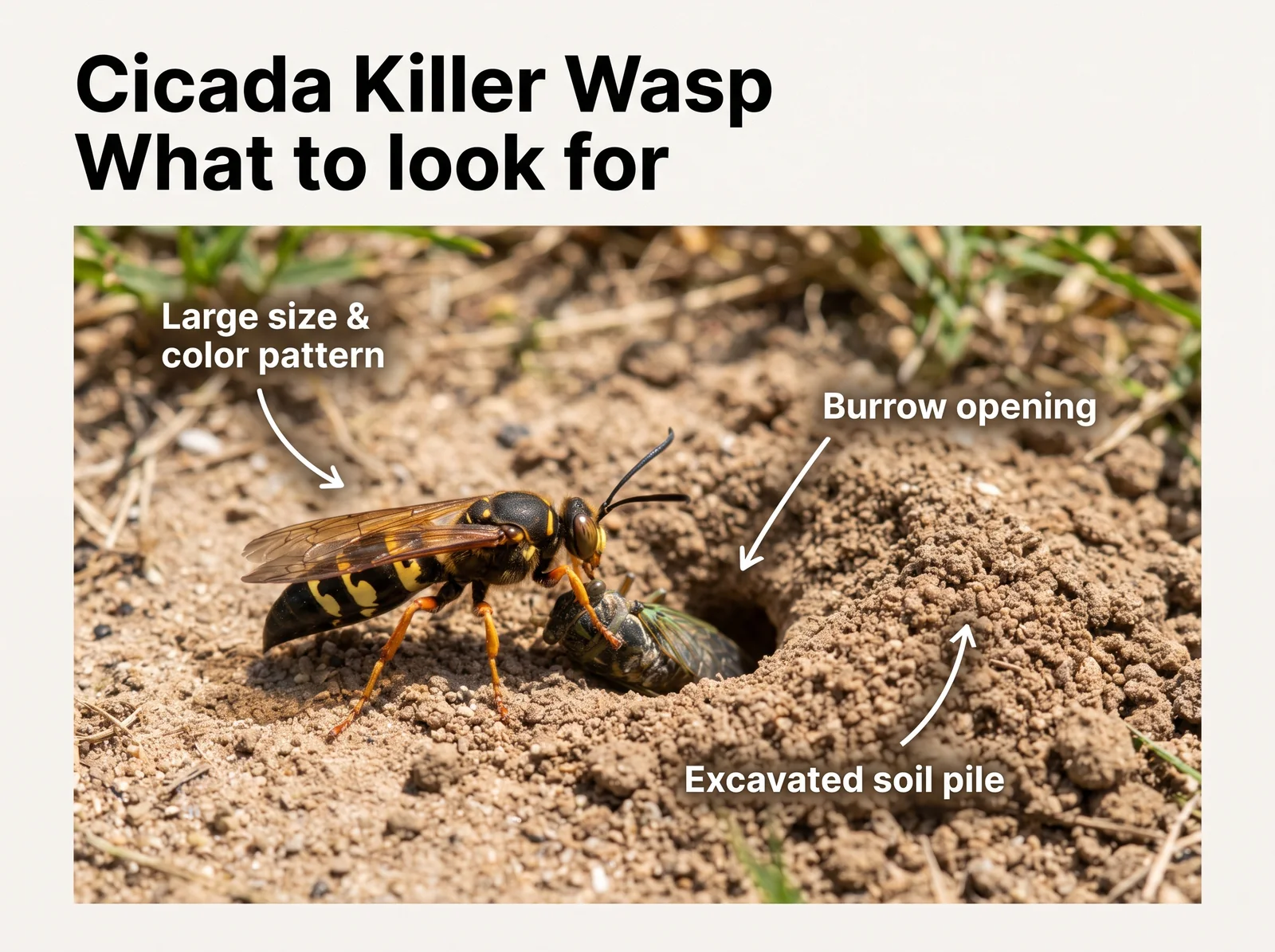
Why are cicada killers digging in your yard right now?
Cicada killers emerge in mid-to-late summer, perfectly timed with the arrival of annual cicadas. Female wasps look for dry, loose, well-drained soil in sunny spots to dig individual nursery burrows. If your lawn has thin turf, bare patches, or exposed sandy soil along flowerbeds, it creates an ideal nesting habitat.
Each female digs her own tunnel, which can reach up to ten inches deep with multiple side chambers. She hunts cicadas in nearby trees, paralyzes them, and drags them down into the burrow to feed her larvae. Once established, multiple females may choose the same patch of ground, creating a crowded nesting zone.
What is the fastest way to disrupt active burrows?
The fastest non-chemical method to force cicada killers out is heavy moisture. These wasps strongly prefer dry, easily excavated earth and will quickly abandon burrows that become soaked. Setting up a sprinkler over active digging sites for several consecutive days encourages females to search elsewhere for drier nesting ground.
You can also use physical disruption right at the entrance holes during late evening when the wasps are resting inside. Raking down the soil piles and placing heavy landscape fabric, patio pavers, or fine wire mesh over the entrances prevents them from entering or exiting easily, breaking their daily hunting routine immediately.
- Run lawn sprinklers over nesting sites daily to saturate the dry soil.
- Tamp down excavated dirt mounds each evening to block tunnel openings.
- Place solid barriers like pavers or weighted tarps over high-activity zones.
How do you identify male vs female behavior quickly?
Understanding which wasps you are seeing helps you choose the right response. Male cicada killers are territorial and will dive-bomb or buzz aggressively near your head if you walk across their territory. Despite this dramatic show, male wasps lack a stinger entirely and cannot harm you or your pets.
Female cicada killers possess stingers, which they use primarily to paralyze cicadas. They spend their daylight hours digging holes or flying heavy prey back to the nest. Females ignore human activity unless you accidentally step on one barefoot or crush it against your skin. Focusing your efforts on female burrows is the key to stopping the cycle quickly.
When should you apply a targeted treatment to burrows?
If heavy watering and physical disruption do not stop the activity fast enough, you can apply a targeted treatment directly into individual burrow openings. The best window for application is after dark or at dawn, when female wasps are completely stationary inside their tunnels.
Only choose an EPA-registered product that clearly lists cicada killer wasps and ground-nesting stinging insects on the label for residential turf use. Apply the product directly into the burrow opening according to the package instructions, and avoid broadcast spraying your entire lawn. This localized approach delivers fast results while minimizing chemical exposure across your yard.
How does lawn maintenance prevent new nests from forming?
Cicada killers dislike dense root systems and tall, thick grass. Upgrading your regular lawn care practices is the most reliable way to make your property unattractive to future generations. Raising your lawn mower blade to keep grass at three inches or higher shades the soil surface, keeping it cooler and harder for wasps to access.
Aerating compacted areas and overseeding thin grass in early fall or spring fills in bare spots before adult wasps emerge next summer. Adding a thick layer of hardwood mulch over bare garden beds also deters females, as they cannot easily dig through coarse, heavy ground coverings.
Can you trap cicada killer wasps effectively?
Standard commercial wasp traps that rely on sweet baits or meat attractants do not work on cicada killers. Because adult cicada killers feed primarily on flower nectar and sap, while larvae feed exclusively on cicadas, food-based traps will not lure them away from their burrows.
If you want to remove individual wasps quickly without broad treatments, you can use an insect net during peak midday sun while females are returning with prey. Once caught, individuals can be safely relocated or disposed of. Combining hand netting with immediate burrow destruction provides fast, localized population reduction.
What should you do after the nesting season ends?
Adult cicada killers naturally die off by late summer or early fall as their life cycle concludes. However, the next generation remains hidden underground as pupae until the following summer. Preparing the soil right after adult activity stops prevents those emerging adults from reusing the same turf.
Once activity ceases, thoroughly level all remaining dirt mounds and aerate the lawn. Repair damaged turf patches with fresh topsoil, fertilizer, and high-density grass seed suited to your region. Establishing thick, healthy ground cover in autumn ensures that your lawn is fully protected when warm weather returns.
Questions you may still have
Do cicada killer wasps cause permanent structural damage to yards?
No, cicada killer wasps cause mostly cosmetic soil disturbance rather than lasting root or structural damage. While their mounds look messy on turf, the tunnels do not kill surrounding grass. Leveling the dirt piles and overseeding bare patches in early autumn easily restores the lawn's original appearance.
Will cicada killer wasps attack dogs or outdoor pets?
Cicada killers generally ignore pets wandering through the yard. However, curious dogs that dig at fresh burrows or snap at low-flying wasps risk being stung defensively by females. Keep pets indoors during treatment applications and until saturated or treated burrow areas have fully dried.
How long does a typical cicada killer infestation last if untreated?
Active nesting typically lasts between four to six weeks in mid-summer. Adult wasps naturally die off as cicada populations decline in late summer. However, pupae overwinter underground, meaning new adults will likely emerge in the exact same lawn area next season unless you thicken your turf.