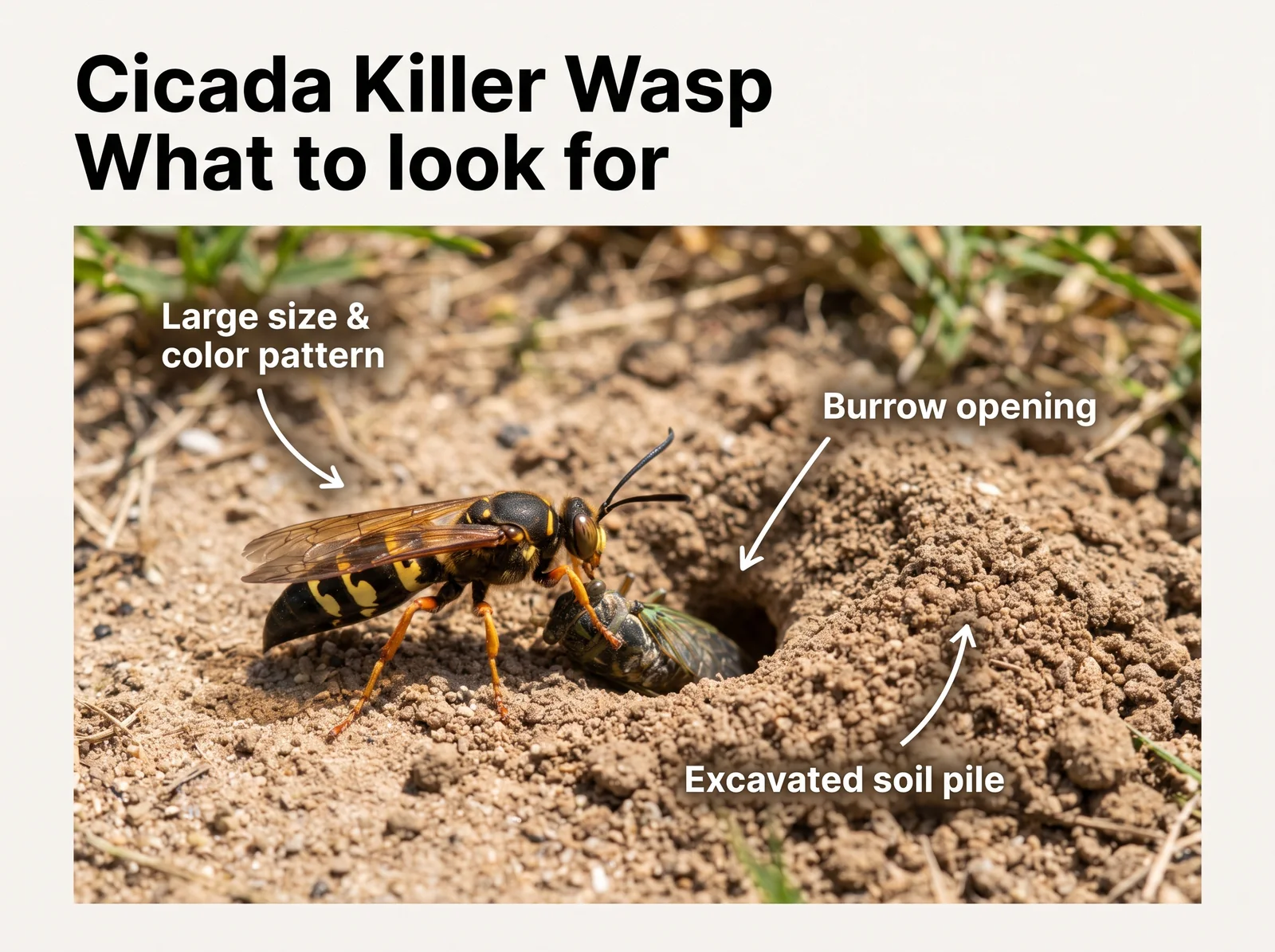
Why are cicada killers nesting in your yard?
Cicada killers search for very specific nesting conditions every summer. Female wasps prefer dry, loose, well-drained soil that sits in full sunlight. They look for areas with sparse vegetation, such as thinning lawns, bare garden borders, sandy play areas, and the edges of brick patios.
Your yard also becomes an attractive target if you have mature trees that host large populations of annual cicadas. Because the females must drag heavy, paralyzed prey back to their burrows, they prefer nesting within a short flying distance of their primary food source.
- Unshaded patches of dry, sandy, or loose soil
- Sparse turfgrass with exposed ground
- Nearby deciduous trees supporting summer cicadas
Are cicada killer wasps dangerous to you and your pets?
Seeing a two-inch wasp hover near your feet can be alarming, but cicada killers are solitary insects without a social colony to defend. The aggressive-looking wasps that dive toward you or buzz nearby are almost always males. Male cicada killers lack a stinger entirely and use territorial posturing simply to compete with other males.
Female cicada killers possess stingers to paralyze cicadas, but they are exceptionally docile toward humans and pets. A female will generally sting only if you step on her with bare feet or trap her against your skin. Unless someone in your home has a severe insect allergy, they present minimal physical risk.
How can changing your lawn care routine deter them?
Because cicada killers despise wet, compacted soil and thick ground cover, improving your turf health is the most reliable long-term control method. Regular irrigation during the peak digging period in mid-to-late summer discourages females from establishing tunnels. Moist soil collapses easily, making excavation frustrating for the insect.
Raising your lawn mower height helps shade the soil surface and keeps the ground cooler. When sunlight cannot warm the bare dirt, female wasps seek nesting sites elsewhere. Fertilizing and overseeding bare patches in early autumn ensures a denser barrier against next year's emerging generation.
- Water dry, sandy lawn sections frequently in July and August
- Raise your mowing deck to leave grass at least three inches tall
- Aerate and overseed thin areas during the fall growing season
How do you manage active burrows without chemicals?
If you want to clear active tunnels from high-traffic walkways or flower beds, simple mechanical barriers work well. Raking the excavated dirt mounds flat exposes the tunnel entrance and disrupts the female's flight pattern. You can also place heavy mulch, gravel, or landscaping fabric directly over favored digging spots.
Soaking individual burrow entrances with a garden hose during the heat of the day will often cause the female to abandon that specific tunnel. Once wet, the wasp struggles to carry dirt out, prompting her to search for better soil conditions off your property.
When should you consider targeted pesticide treatments?
Chemical treatments are rarely necessary for cicada killers, but you might consider them if burrows threaten structural walkways or occur near individuals with confirmed venom allergies. Broadcast spraying across your entire lawn is ineffective and damages beneficial garden life, so treatment should always focus strictly on individual holes.
If you decide to use an insecticide, select an EPA-registered product specifically labeled for ground-nesting wasps and your lawn site. Apply the product directly into active burrow openings late in the evening when the female is inside resting, and follow all package instructions regarding safety and watering.
How can you prevent cicada killers from returning next year?
Cicada killers produce a single generation each year, emerging from underground cells in early to mid-summer. To break this seasonal cycle, your focus should turn to ground renovation once late summer activity winds down. Establishing thick ground cover prevents emerging adults from reusing the same territory.
Apply a generous three-inch layer of hardwood mulch or river rock over open garden beds and under shrubbery. For areas along retaining walls or paver borders, sweep coarse polymeric sand into the joints to seal off the soft bedding sand that wasps love to tunnel through.
Questions you may still have
How long do cicada killer wasps stay active each year?
Adult cicada killers remain active for about six to eight weeks during mid-to-late summer, coinciding with the emergence of cicadas. Adults die off naturally by late summer or early fall once mating and egg-laying finish. The next generation stays underground as pupae throughout winter and spring.
Do cicada killer wasps cause structural damage to lawns and patios?
While individual burrows create small mounds of loose dirt, they rarely cause significant structural damage to lawns. However, numerous burrows dug beneath patio pavers, walkway stones, or retaining walls can occasionally shift the bedding sand, leading to uneven surfaces if left unaddressed over multiple seasons.
Will cicada killer traps work to eliminate them?
Commercial wasp traps are designed for yellowjackets and paper wasps that feed on sugars and meats, so they do not attract cicada killers. Catching individual wasps with a net or physically blocking their tunnels is far more effective than attempting to bait them with standard traps.