What causes a cicada killer wasp infestation in your yard?
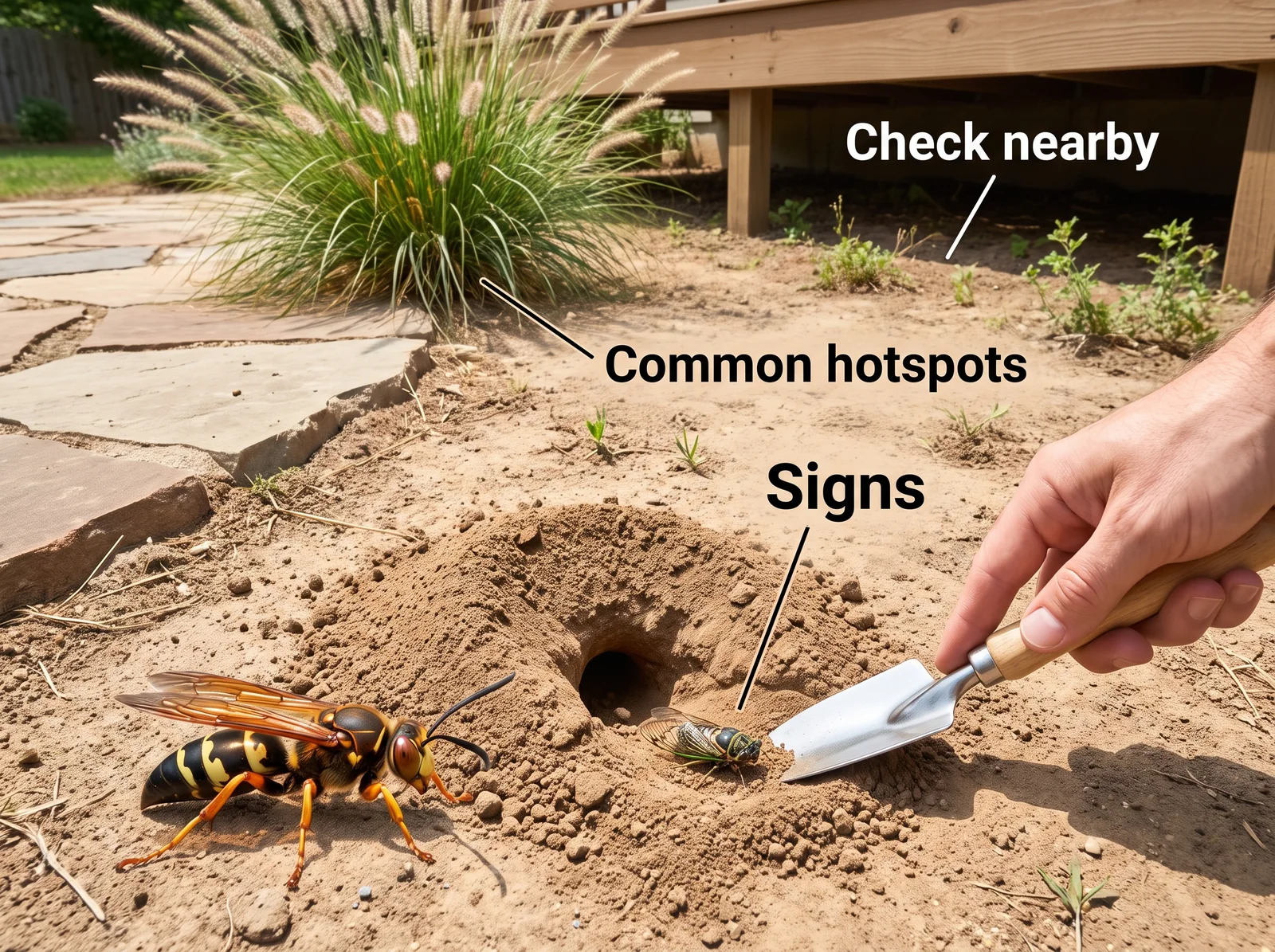
Cicada killers choose nesting sites based strictly on soil texture and ground cover. Females seek out light, well-drained, sandy soils located in full sunlight. They avoid dense, lush grass because the root systems make digging difficult and the shade keeps the ground too cool.
If your lawn has thin patches, bare garden edges, or exposed mulch beds, it provides the exact real estate these wasps need. An infestation simply means multiple individual wasps found your yard's soil conditions ideal for digging separate burrows in the same neighborhood.
- Thin or dying turf with exposed topsoil
- Dry, loose, or sandy garden soil
- South-facing slopes that receive intense sunlight
- Sparse mulch beds around shrubs and trees
How can you identify their burrows and active nests?
Identifying cicada killer burrows is straightforward once you know what to look for. Each female digs her own tunnel, leaving a distinctive horseshoe-shaped mound of loose dirt around a nickel-sized entrance hole. You will often see these mounds along sidewalk edges, retaining walls, or in sparse lawn patches.
Unlike social yellowjackets that share a single colony entrance, cicada killers create numerous individual tunnels across an area. If you see dozens of mounds, you are looking at several independent wasps working in close proximity rather than a coordinated underground hive.
Why does watering your lawn discourage these wasps?
Cicada killers despise wet, muddy soil. Their digging behavior relies on loose, dry earth that is easy to excavate without collapsing into slurry. Applying regular, deep irrigation to affected areas can quickly make your lawn unappealing to nesting females.
Set up sprinklers to soak the infested zones during midsummer when the adults first emerge and begin burrowing. Keeping the top few inches of soil consistently moist deters new digging and often prompts existing wasps to abandon their tunnels in search of drier terrain.
What landscape changes stop them from returning?
The most effective long-term solution is eliminating the bare ground that drew them in. Overseeding thin areas of your lawn in early fall or spring creates a thick root network that physically blocks future excavation. Aerating and fertilizing also improve overall turf density.
For landscape beds, apply a three-inch layer of hardwood mulch or plant ground-covering perennials. Heavy mulch suppresses their digging efforts and shades the soil, lowering ground temperatures below what the wasps prefer for rearing their young.
- Overseed bare patches with dense, region-appropriate grass seed
- Maintain a turf height of three inches or higher during summer
- Add thick mulch or landscape fabric over open garden beds
- Establish dense perennial ground covers in dry borders
How do you manage active burrows safely?
You can disrupt active burrows mechanically without using sprays. Raking or sweeping away the excavated mounds of dirt exposes the tunnel entrance and confuses the returning wasp. You can also place heavy flat stones, pavers, or weed barrier over active holes.
Targeting the burrows at night or in the early morning is best because cicada killers are inactive in cool, dark conditions. By blocking access to their tunnels, you interrupt their nesting cycle and prevent them from stocking the burrows with paralyzed cicadas.
When are targeted treatments appropriate?
If habitat modification is not enough and the burrows are near high-traffic paths or children's play zones, targeted treatments can be applied directly to individual holes. Blanket lawn spraying is unnecessary and ineffective because these insects spend most of their time inside burrows or up in trees hunting.
Always choose an EPA-registered product explicitly labeled for outdoor ground-nesting wasps and follow all package instructions precisely. Apply the product directly into the active burrow entrance during late evening when the female is inside resting, minimizing any drift or contact with beneficial pollinators.
What is the natural lifespan of a summer infestation?
Patience is sometimes the easiest strategy because adult cicada killers have an exceptionally short season. Adults emerge in midsummer, mate, dig burrows, provision them with cicadas, and die naturally within six to eight weeks. By late summer, adult activity stops entirely.
While the new generation remains buried underground as pupae until next year, taking proactive lawn care steps in late summer and autumn ensures your soil is thick and uninviting before the next emergence cycle begins.
Questions you may still have
Do male cicada killer wasps pose any physical threat?
Male cicada killers are entirely harmless because they lack a stinger. However, they are intensely territorial and will dive-bomb or hover aggressively around people and pets who walk near their territory. This behavior is pure bluffing to defend their mating ground, and they cannot inflict harm.
Can cicada killer burrows cause structural damage to patios or walls?
A large concentration of burrows along the base of retaining walls, brick walkways, or patio pavers can displace substantial amounts of soil. Over time, repeated digging may cause sand beds to shift or pavers to settle unevenly, making early deterrents and soil stabilization beneficial.
Will filling active holes with dirt stop the wasps?
Simply kicking loose dirt into an entrance hole rarely stops a female cicada killer, as she can easily dig her way back out in a few minutes. Stomping the soil firmly, placing a solid stepping stone over the opening, or thoroughly soaking the ground with water provides a much more effective barrier.