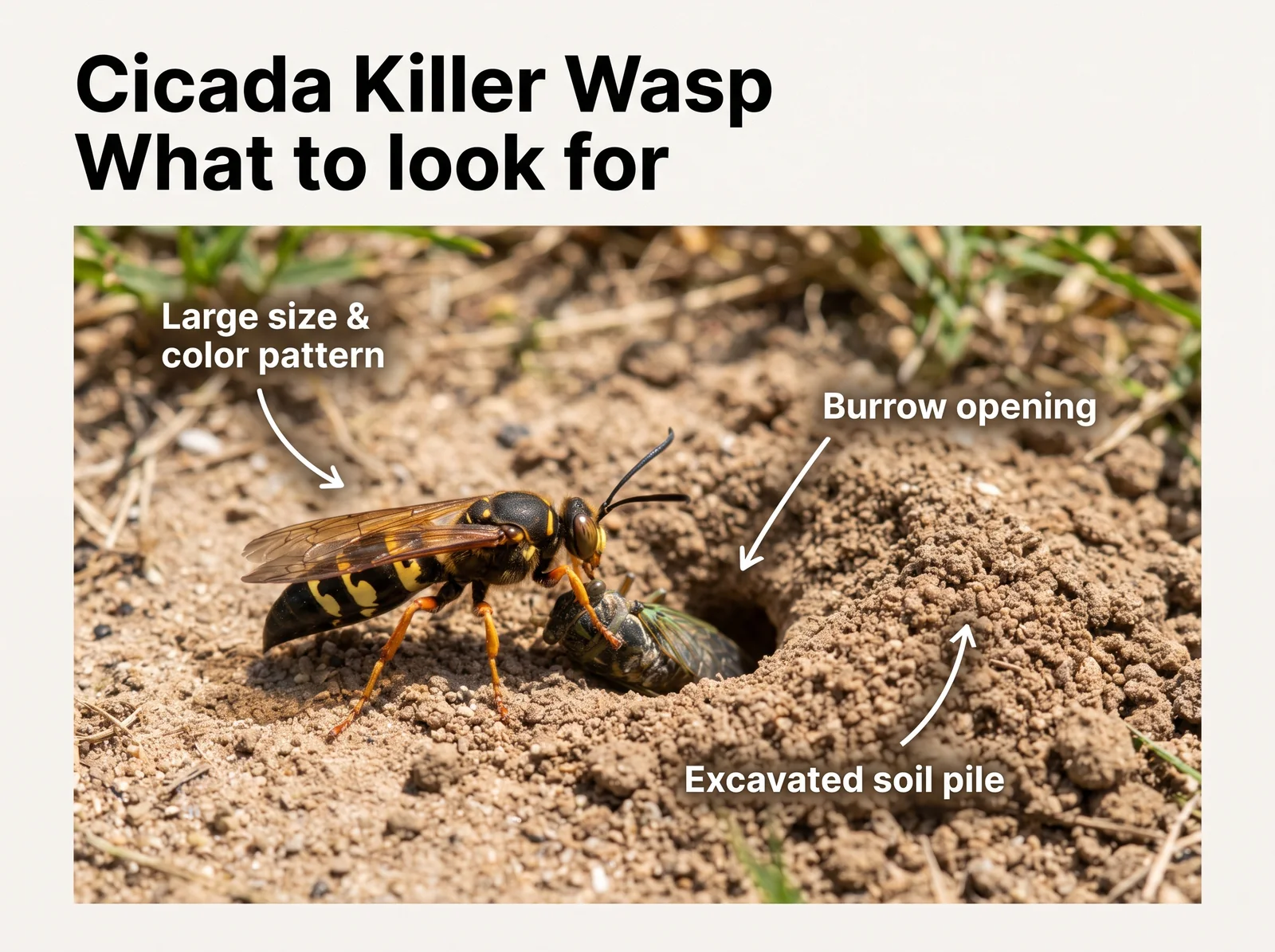
What do cicada killer wasp holes look like?
Cicada killer wasp burrows are easy to recognize once you know what to look for. Each burrow starts with an opening about the width of a nickel or quarter, surrounded by a distinct horseshoe or U-shaped pile of loose excavated dirt. The female wasp kicks soil out behind her as she excavates, creating a miniature trench leading into the tunnel.
You will usually spot these openings in full sun where the grass is thin, patchy, or absent. Common locations include lawn edges, raised garden beds, sandbox borders, and along brick walkways. Unlike ant hills or mole runs, the entrance hole stays open during the day while the female flies out to hunt cicadas.
Should you fill in active burrow holes immediately?
Rushing to stomp on or fill an active burrow while the female is away hunting often creates more work for you. If you simply push dirt back into an occupied tunnel, the female wasp will easily dig her way back out or start an entirely new hole just inches away.
A better approach is to wait until late evening or early morning when the wasp is resting inside the burrow. If you choose to use an EPA-registered insecticidal dust, apply it directly into the tunnel entrance according to the product label, and leave the opening undisturbed for a day so the wasp contacts the material as she moves.
How do you repair and level the dirt mounds?
Once the wasps are no longer actively using the site, you can restore your lawn surface. Use a flat shovel, a garden rake, or a push broom to spread the loose excavated dirt back across the surrounding turf. Doing this prevents the soil mounds from smothering healthy grass underneath.
After leveling the mounds, tamp down the entrance holes firmly with your foot to collapse the main vertical shaft. Running a lawn roller or simply walking over the area packs the soil back down, which prevents lawnmower wheels from sinking into hidden voids beneath the surface.
Why does soil moisture help get rid of holes?
Female cicada killers prefer digging in dry, loose, well-drained soil because wet ground is heavy and prone to tunnel cave-ins. Keeping your lawn consistently moist during their midsummer nesting period is one of the easiest ways to deter new digging.
Set your sprinklers to run deeply once or twice a week rather than giving the yard light, daily sprinkles. Soaking the top few inches of dirt makes the ground unappealing to the wasps, encouraging them to seek nesting sites outside your property lines.
- Water turf thoroughly during peak summer activity.
- Use drip irrigation in bare landscape beds to keep topsoil damp.
- Avoid letting soil dry out completely in hot, sunny patches.
How can you prevent wasps from digging holes in garden beds?
Unplanted garden borders and mulch beds are prime real estate for burrowing wasps. Adding a thick protective barrier stops females from reaching the dry soil they need to build nurseries for their larvae.
Lay down a three-inch layer of hardwood mulch, bark chips, or heavy gravel over exposed garden soil. You can also place landscape fabric under the mulch in high-risk zones. The coarse texture and depth create a physical shield that female wasps cannot easily dig through.
What long-term lawn care fixes stop burrowing?
The most reliable long-term defense against burrow holes is a thick, healthy stand of turf grass. Cicada killers avoid dense root systems because roots make excavation slow and difficult.
Plan to aerate, overseed, and fertilize thin patches of your lawn in late summer or early fall after the current wasp generation dies off. Raising your lawnmower blade to cut grass at three to four inches also helps shade the soil surface, keeping ground temperatures cooler and less inviting to nesting females.
When will the burrowing activity stop naturally?
Cicada killer wasps have a very short adult lifespan, usually lasting only six to eight weeks in mid-to-late summer. Once mating and egg-laying finish, adult wasps naturally die off with the onset of early autumn weather.
If the dirt mounds are not causing severe damage or posing a hazard along high-traffic walkways, you can often leave them alone until late summer. Once active flights cease, you can fill the holes, overseed the bare spots, and prepare your turf so wasps do not return next season.
Questions you may still have
Can pouring boiling water down the hole collapse the tunnel?
Pouring boiling water into a burrow can collapse the tunnel walls and kill developing larvae inside, but it will also kill surrounding grass roots and beneficial soil microbes. If you want to protect your turf, it is better to soak the area with regular hose water to deter digging and then rake the soil flat.
Do abandoned cicada killer holes attract other pests?
Yes, abandoned burrows can occasionally provide shelter for ground-nesting bees, small rodents, or spiders looking for pre-dug underground cavities. Tamping down the entrance holes and packing the soil firmly as soon as wasp activity ends ensures other pests cannot reuse the open tunnels.
Will new cicada killers emerge from the same holes next year?
Young wasps develop underground through the winter and dig their way out the following summer. However, they do not necessarily use the old tunnel entrance. They dig their own new exit holes, which is why repairing soil and thickening your grass in the fall is essential to prevent reinfestation.