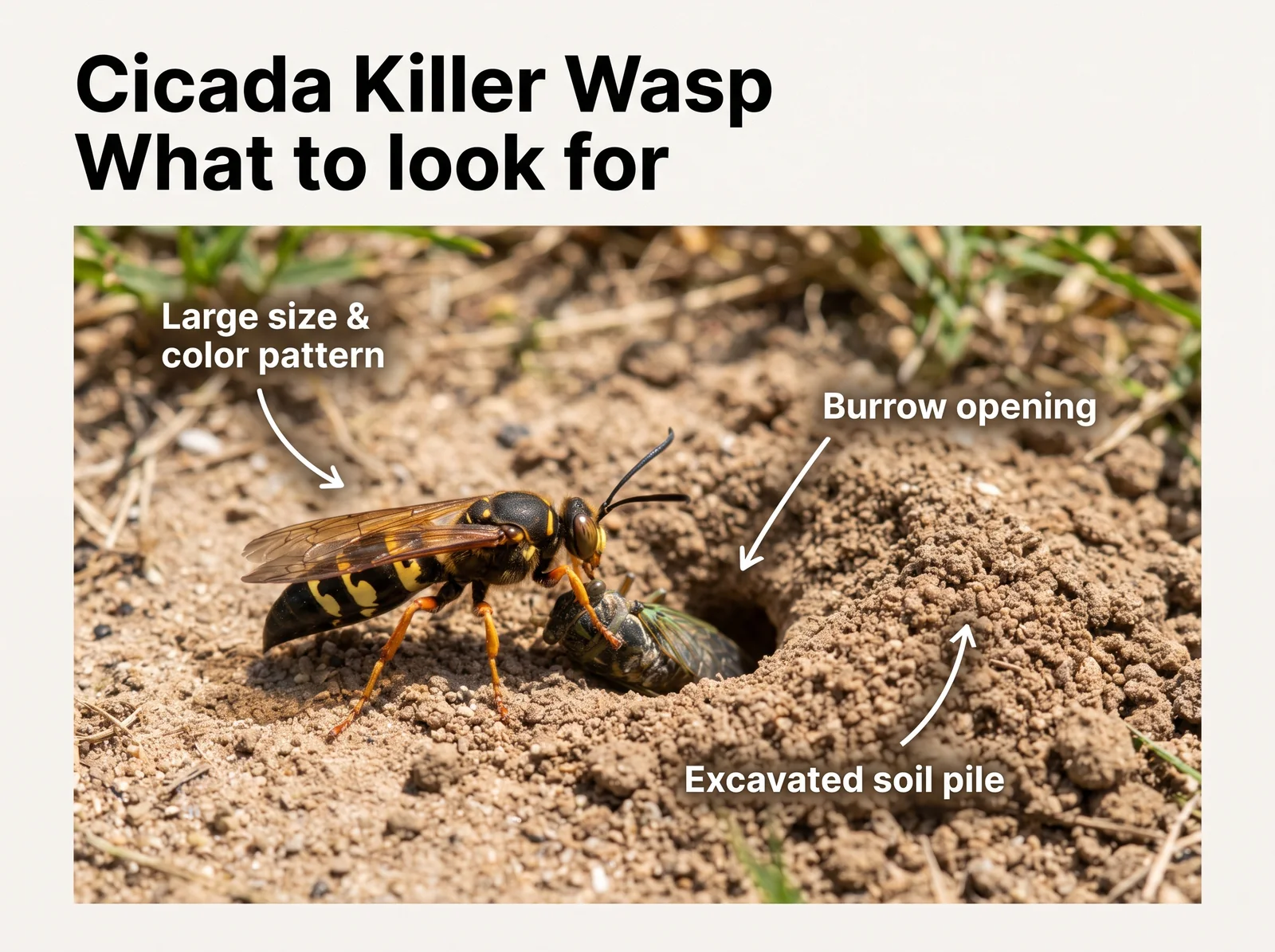
Why are cicada killers digging in your yard?
Female cicada killer wasps hunt for very specific conditions before they dig. They look for exposed, dry soil in full sunlight where digging burrows requires little effort. Sparse lawns, garden borders, sandbox edges, and loose mulch beds are prime real estate for them.
These wasps are solitary diggers, meaning each female builds her own underground nursery tunnel. They do not maintain collective hives like yellowjackets. If your yard provides plenty of dry, undisturbed dirt alongside a healthy cicada population in nearby trees, nesting females will naturally gravitate toward your property.
How does deep watering discourage nesting?
Cicada killers dislike wet, muddy soil because it collapses while they try to excavate burrows. One of the simplest natural controls is running your sprinklers regularly over active nesting zones.
Keep the top few inches of dirt consistently moist during their midsummer nesting window. When the soil stays damp and heavy, females abandon the site in search of lighter, drier dirt elsewhere. This simple change stops ongoing tunneling while improving the overall health of your turf.
- Water dry, sandy patches heavily in the morning during peak July and August activity.
- Keep flowerbeds and garden borders moist rather than letting the soil bake dry in the sun.
Can dense lawn growth push them out naturally?
A thick, lush lawn serves as a natural physical barrier that cicada killers cannot easily penetrate. These insects need clear access to open ground so they can drag heavy, paralyzed cicadas straight into their burrow entrances.
Tackling patchy turf prevents them from returning year after year. Raise your mower blade to at least three inches during the summer months to shade the soil surface. Taller grass keeps the ground cooler and blocks the clear flight paths these wasps need when bringing prey home.
- Aerate and overseed bare patches in early autumn or spring to eliminate open dirt spots.
- Apply a balanced fertilizer schedule to encourage thick root and blade growth.
What physical barriers protect garden beds and mulch?
Landscaping beds with light, loose mulch often attract digging females. You can physically exclude them by modifying the ground cover or laying down physical barriers.
Replace fine, dry mulch with heavy hardwood chips or gravel that wasps cannot easily kick out of the way. In vegetable gardens or landscape beds with persistent digging, install breathable weed barrier fabric beneath the mulch layer to completely block soil access.
- Place wire mesh or heavy fabric over exposed dirt around garden perimeters.
- Use dense ground-cover plants like creeping thyme or pachysandra to cover bare bed edges.
How do you safely collapse active burrows?
Once you notice distinctive U-shaped mounds of dirt, you can manually disrupt the nesting process. Raking down the loose dirt piles and tamping the soil flat removes the visual markers females use to find their holes.
After leveling the mounds, soak the area thoroughly with water and cover the entrance with a heavy object like a patio paver or landscape stone. The female will waste significant energy trying to reopen the blocked hole and will usually abandon the location after repeated disruptions.
Are male cicada killers actually dangerous to you?
Much of the panic surrounding these wasps comes from territorial males that dive-bomb people, pets, and lawnmowers. However, male cicada killers completely lack a stinger and cannot harm you in any way.
Females possess stingers for paralyzing cicadas, but they are remarkably docile toward humans. They rarely sting unless stepped on barefoot, grabbed, or directly crushed against skin. Understanding that their aggressive behavior is harmless posturing helps you manage them calmly without turning to emergency chemical measures.
When should you expect natural activity to end?
Cicada killers follow a very short seasonal life cycle tied directly to the emergence of annual cicadas. Adult wasps typically appear in mid-summer, stay active for roughly four to six weeks, and naturally die off by late summer or early fall.
Because their active season is so brief, minor infestations often require little intervention beyond lawn repair. Planning your fall turf improvements ensures that by the time next year's generation matures, your yard will no longer offer the sparse, dry soil they require to dig.
Questions you may still have
Do natural repellent sprays like vinegar or essential oils work?
Strong scents like peppermint or vinegar rarely offer lasting deterrence against cicada killers. While a temporary spray might irritate a wasp at the surface, it does not alter the underlying soil conditions that attracted the female initially. Long-term lawn thickening and moisture management are far more reliable natural strategies.
Will putting away bird feeders help reduce cicada killers?
No, bird feeders do not influence cicada killer numbers. Adult cicada killers feed primarily on flower nectar and tree sap for personal energy, while using cicadas exclusively to feed their larvae. Keeping or removing bird feeders has no measurable effect on their nesting choices.
Can I trap cicada killers with homemade bottle traps?
Homemade sugar or meat traps are ineffective for cicada killers. Because females hunt only live cicadas and adults take nectar directly from plants, they ignore common trap baits used for yellowjackets or flies. Modifying soil conditions remains the best non-chemical management method.