Which insecticide formulations work best against cicada killer wasps?
Insecticidal dusts are widely considered the most effective formulation for ground-nesting solitary wasps. Dusts settle along the inner walls of the burrow and cling to the female wasp's body as she enters and exits her nest. This ensures she comes into direct contact with the active ingredient even if she is out hunting cicadas when you treat.
Liquid concentrates and ready-to-use residual sprays labeled for outdoor turf and ground-nesting stinging insects also work. However, liquids can sometimes cause the soil burrow to collapse prematurely or absorb too quickly into dry dirt. If you choose a liquid, apply it directly down into the burrow entrance rather than broadcasting it across your entire lawn.
- Insecticidal dusts applied with a hand duster directly into entrance holes.
- Liquid residual concentrates labeled specifically for outdoor ground-burrowing wasps.
- Avoid aerosol foggers, which disperse into the air and fail to reach deep underground chambers.
What active ingredients should you look for on the product label?
When browsing garden centers, check the active ingredients list on the packaging. Pyrethroids such as deltamethrin, cyfluthrin, permethrin, and bifenthrin are common in products labeled for stinging ground insects. These ingredients provide a reliable knockdown and leave a temporary residual barrier around treated soil.
Another group of active ingredients includes carbamates and botanical compounds like pyrethrins. Botanical dusts provide rapid knockdown but break down faster in sunlight. Always confirm that both the target pest and your specific application site, such as residential lawns or ornamental beds, are explicitly listed on the container label.
Why is daytime broadcast spraying ineffective for these wasps?
You might see large males hovering aggressively over your lawn during bright, sunny hours. Male cicada killers do not have stingers and cannot harm you, though their territorial dives look intimidating. Spraying the open air or broadcasting liquid across the grass wastes product because males constantly fly and females spend hours away searching for cicadas in nearby trees.
Broadcast chemical treatments also increase risks to beneficial pollinators, earthworms, and neighborhood pets. Spot-treating individual tunnel openings delivers the active ingredient exactly where the egg-laying female lives while keeping the overall chemical footprint in your yard as small as possible.
When is the best time of day to apply insecticide to burrows?
Timing makes a significant difference in how well an insecticide works. The best window for treating burrows is late dusk or after dark. Cicada killer females return to their burrows for the night and remain resting inside until morning temperatures rise.
Treating at night also means territorial males will not buzz around your head while you work. Use a red-filtered flashlight to locate active holes so you do not startle the wasps, and keep your movements calm and deliberate while applying the product.
- Inspect your yard during late afternoon to flag active burrow openings with small markers.
- Wait until complete darkness when the female is resting inside her tunnel.
- Apply the labeled amount of product into the hole and leave the entrance open so she tracks it through the tunnel.
How can you reduce nesting without using heavy chemicals?
Cicada killers choose nesting sites based on soil conditions. They prefer dry, sandy, loose soil in areas with thin or patchy grass. Changing these environmental conditions is often enough to convince them to nest somewhere else next summer.
Maintaining a dense, healthy lawn is the best long-term defense. Thick turf grass blocks access to the soil surface and discourages females from digging. Aerating, overseeding bare patches, and keeping your lawn well-watered during July and August makes the dirt heavy and unappealing for burrowing.
- Water dry lawn areas deeply to keep soil moist during peak July and August nesting.
- Add a 3-inch layer of hardwood mulch over bare garden beds.
- Overseed bare patches in late summer or early spring to build thick grass density.
What non-chemical physical controls can you try first?
If you only have a few burrows, non-chemical exclusion tactics can resolve the problem without insecticides. Placing physical barriers over active holes disrupts the female's nesting routine. Heavy wire mesh, landscape fabric, or simple flat patio pavers placed over burrow entrances prevent the wasp from dragging cicadas underground.
You can also use a garden hose to run a steady sprinkler over the nesting zone for several days. Cicada killers require dry conditions to maintain their tunnel walls. Constant moisture causes burrows to slump, prompting the female to abandon the location entirely.
How do you confirm you are treating the right insect?
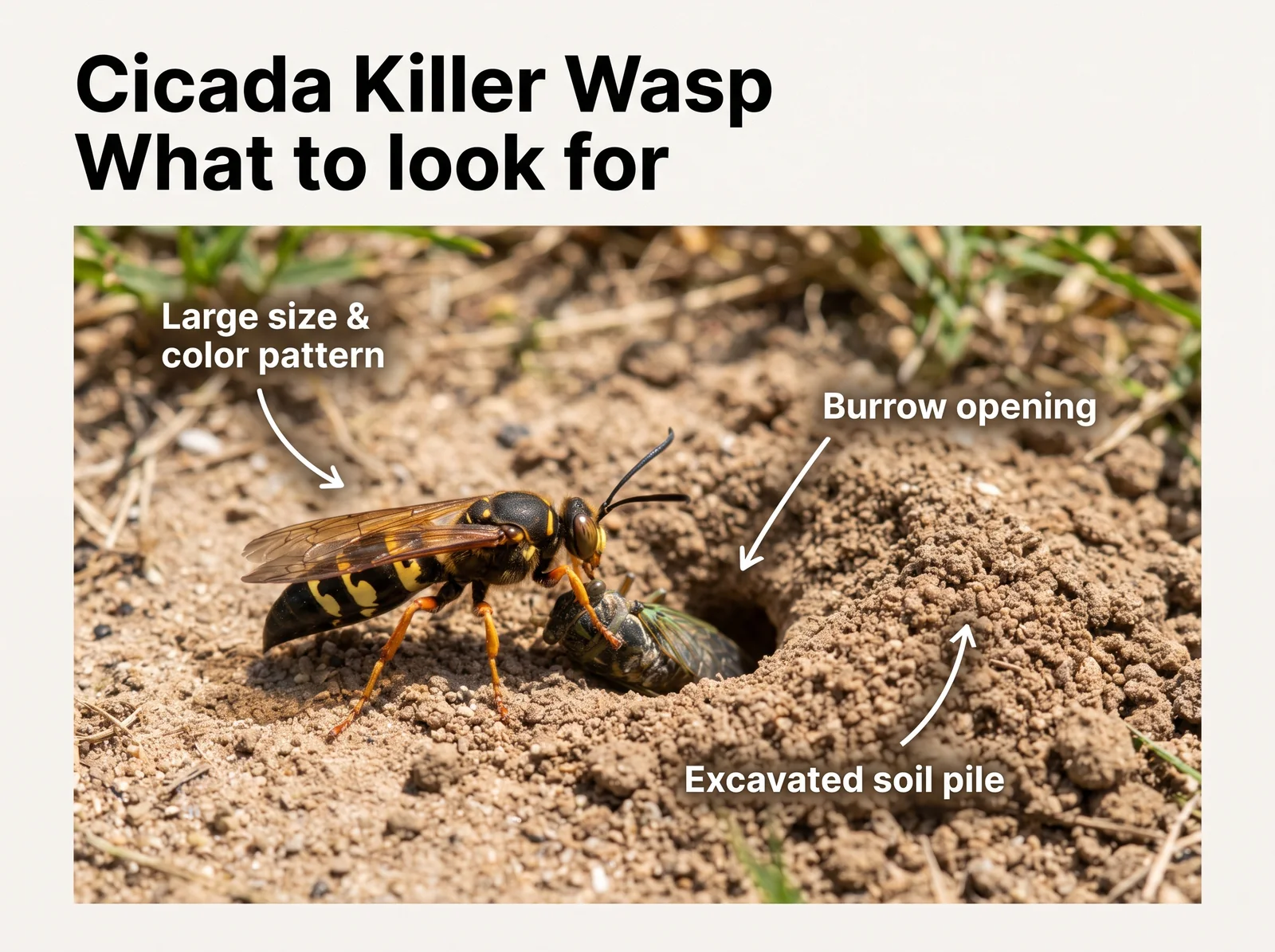
Before applying any product, verify that you are dealing with cicada killers and not aggressive social wasps like yellowjackets. Cicada killers are exceptionally large, reaching up to two inches long, with black bodies, yellow markings on their abdomen, and reddish-orange wings. Each burrow has a characteristic horseshoe-shaped mound of loose dirt around the single entrance hole.
Yellowjackets, by contrast, build colonial nests with hundreds of workers defending a single opening. Yellowjackets attack aggressively in swarms if disturbed, whereas cicada killers are solitary and will not defend their burrows in groups. Misidentifying the insect can lead to ineffective treatment and unnecessary sting risks.
Questions you may still have
Should you stomp or cover the burrow entrance after applying insecticide?
No, you should leave the burrow entrance open after applying an insecticidal dust. The female wasp needs to walk through the treated opening to pick up the powder on her legs and body. If you collapse the tunnel immediately, she may simply dig a new burrow right next to the old one without contacting the product.
Will treating cicada killers harm your grass or soil?
EPA-registered insecticidal dusts and turf sprays labeled for residential lawns do not damage turfgrass when applied according to label instructions. Because burrow treatments target individual holes with tiny amounts of product, the impact on surrounding grass, soil microbes, and non-target insects is minimal compared to wide broadcast applications.
How long does it take for a burrow treatment to eliminate the wasp?
Most labeled dusts and liquid residual treatments work within 24 to 48 hours after the female enters or exits her burrow. If you still see fresh soil being pushed out of the hole after three days, verify that the burrow is occupied and reapply strictly according to the re-treatment intervals stated on the product label.